Death Stranding 2: A Bigger Beach, A Longer Walk, And More Combat
Death Stranding 2: On the Beach delivers Kojima Productions' 75-hour scale, richer combat, and emotional Low Roar songs.
When a Eurogamer writer settled into Kojima Productions headquarters and played roughly thirty hours of Death Stranding 2: On the Beach, the number looked impressive on its own. Then the context arrived: those thirty hours represented only about 40 percent of the story. By simple math, the sequel could run for around seventy-five hours, nearly double the forty-hour average of the first game. For a series built on long walks, fragile cargo, and strange connections, the scale had become almost literal. The beach was not just wider; the walk was longer.
By 2026, the conversation around Death Stranding 2 has shifted from launch-day countdowns to what that scale actually means. The game arrived on June 26, 2025, for PlayStation 5, and its initial release was paired with a limited-edition DualSense controller. In the months since, the question has become less about whether the sequel is bigger than the original and more about how Kojima Productions used that extra space. The answer, based on early hands-on impressions, is not simply more terrain. It is more story, more combat options, and more of the studio's unmistakable strangeness.
Kojima Productions did not arrive at this scale by accident. The first Death Stranding was the debut project of a brand-new studio. It had Sony's support, but it was still a new IP from a new team, even if that team was led by a world-famous designer. The original went on to reach twenty million players, a figure that includes people who checked it out through subscription services. That success gave the sequel room to follow the classic bigger-and-better path, though it still carries Kojima's unique twist. The studio is no longer introducing itself. It is expanding an idea.
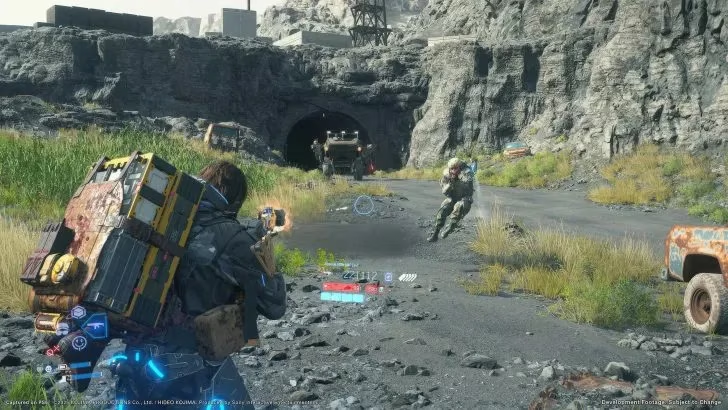
Combat is one of the clearest changes. Kojima said that people all over the world kept asking him to make another Metal Gear, so he added more options for combat. The process came with a little anxiety. Many staff members who worked with him on Metal Gear still work at Kojima Productions, and they kept asking one another whether the new mechanics felt too much like Metal Gear. It was not on purpose. That detail matters. The sequel is not trying to become a stealth-action game in disguise. It is trying to give players more ways to respond when the journey turns hostile, while still remaining recognizably Death Stranding.
Music will carry a different kind of weight. The sequel includes some unreleased songs by the late Ryan Karazija, founder and lead vocalist of Low Roar. Kojima said Karazija's family contacted him and told him that the singer wished for these songs to be included in the new game. Low Roar's work was heavily featured in the previous Death Stranding, and the return of unheard material gives the sequel an emotional thread that no marketing campaign could manufacture. For a game about loss and connection, the detail lands with unusual force.
| Element | Original | On the Beach |
|---|---|---|
| Story length | About 40 hours on average | Projected around 75 hours |
| Eurogamer session | Not applicable | 30 hours, roughly 40 percent of story |
| Combat | More limited | Expanded options |
| Music | Low Roar heavily featured | Unreleased Karazija songs included |
| Launch | PlayStation first, later wider platforms | June 26, 2025, PlayStation 5 first |
The release strategy also tells a story. Death Stranding 2 launched initially on Sony's PlayStation 5, but Kojima Productions purchased back the publishing rights from Sony. That move made a future on PC and Xbox fair to expect, much like the original eventually traveled beyond PlayStation. As of 2026, the initial PS5 chapter is history, while the wider-platform question still hangs over the beach. The original proved that Death Stranding could survive the jump between audiences. The sequel's regained rights suggest the studio wants that option again.
What remains most striking is how the numbers and the emotions sit side by side. A seventy-five-hour projection sounds like a marathon, yet the game's heart still seems to be in quiet moments, strange landscapes, and connections that form between isolated people. The expanded combat answers a demand from fans, but it also risks blurring the line between homage and imitation. Kojima's staff felt that tension. The fact that they talked about it openly suggests the sequel is aware of its own shadows.
For players in 2026, Death Stranding 2: On the Beach is no longer a rumor or a distant sequel. It is a large, released game with a longer story, more combat, and a posthumous musical gift at its center. The first game asked players to reconnect a fractured world. The second asks whether a bigger world can still feel intimate. That is the real hike. Everything else, including the seventy-five-hour estimate, is just the terrain.