Death Stranding 2: Carrying Forward Kojima's Unique Strand Experience
Death Stranding 2's anticipated evolution promises to build on the original's groundbreaking strand gameplay and atmospheric journey, redefining connection in gaming.
As I look ahead to 2026, I can't help but reflect on how Hideo Kojima's Death Stranding fundamentally changed my perspective on what a video game could be. That initial journey across the fractured landscapes of North America wasn't just about delivering packages—it was about creating connections in a world that had forgotten how to connect. Now, with Death Stranding 2 in development, I find myself wondering how Kojima Productions will build upon that foundation while maintaining the thoughtful, atmospheric experience that made the original so special.
When I first played Death Stranding back in 2019, I'll admit I was skeptical about a game centered around delivery mechanics. But what I discovered was something far more profound—a meditation on isolation, connection, and the quiet moments between dramatic story beats. The asynchronous online functionality, where players could leave structures, supplies, and encouraging signs for others, created a sense of community unlike anything I'd experienced. It felt like we were all working together toward a common goal, even though we never actually saw each other. This "strand gameplay" was as innovative as discovering electricity in a world that only knew fire—it fundamentally changed how I thought about multiplayer interactions.
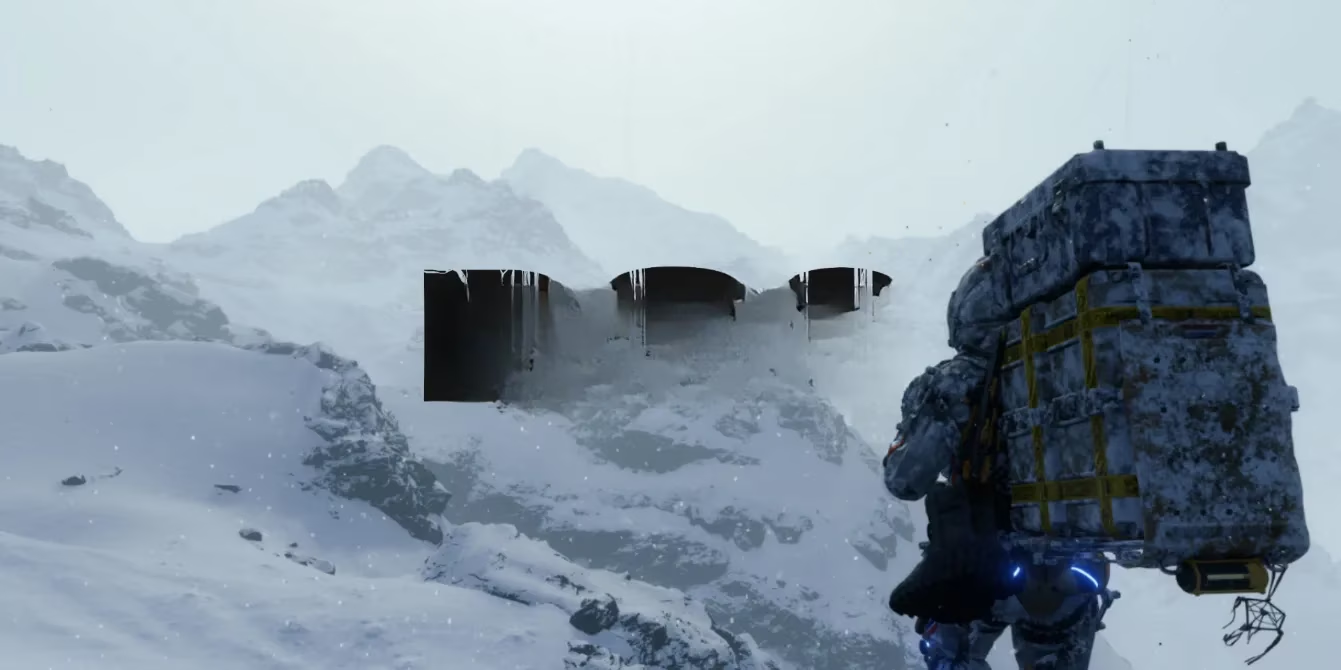
The Atmospheric Journey: More Than Just Walking
What truly made Death Stranding memorable for me wasn't the dramatic story moments (though those were incredible), but rather the quiet stretches between them:
-
The soundscape: Low Roar's haunting tracks playing as I traversed windy plains
-
Environmental storytelling: Player-built structures creating a living history of other journeys
-
Rhythmic gameplay: The meditative quality of planning routes and managing cargo
These elements combined to create an atmosphere that was both lonely and comforting—like being the only person in a vast library filled with books written by friends you've never met. The game's willingness to be "long and slow" was actually its greatest strength, allowing space for reflection and immersion.
One feature I'd love to see expanded in Death Stranding 2 is the ability to listen to the soundtrack while traveling. In the original, you could only enjoy the music in safe houses, but being able to create personal musical moments during your journey would add another layer of emotional connection. Imagine cresting a mountain ridge as a particular song swells—these could become the game's most memorable moments.
Characters That Stay With You
Kojima has always excelled at creating memorable characters, and Death Stranding was no exception. The cast felt like they were plucked from different genres and woven together into a coherent whole:
| Character | Role | Emotional Impact |
|---|---|---|
| Sam Porter Bridges | Protagonist | The reluctant hero carrying literal and figurative burdens |
| Fragile | Companion | A survivor bearing physical and emotional scars |
| Heartman | Researcher | A man literally dying to reconnect with lost family |
| Die-Hardman | Leader | A figure haunted by past decisions |
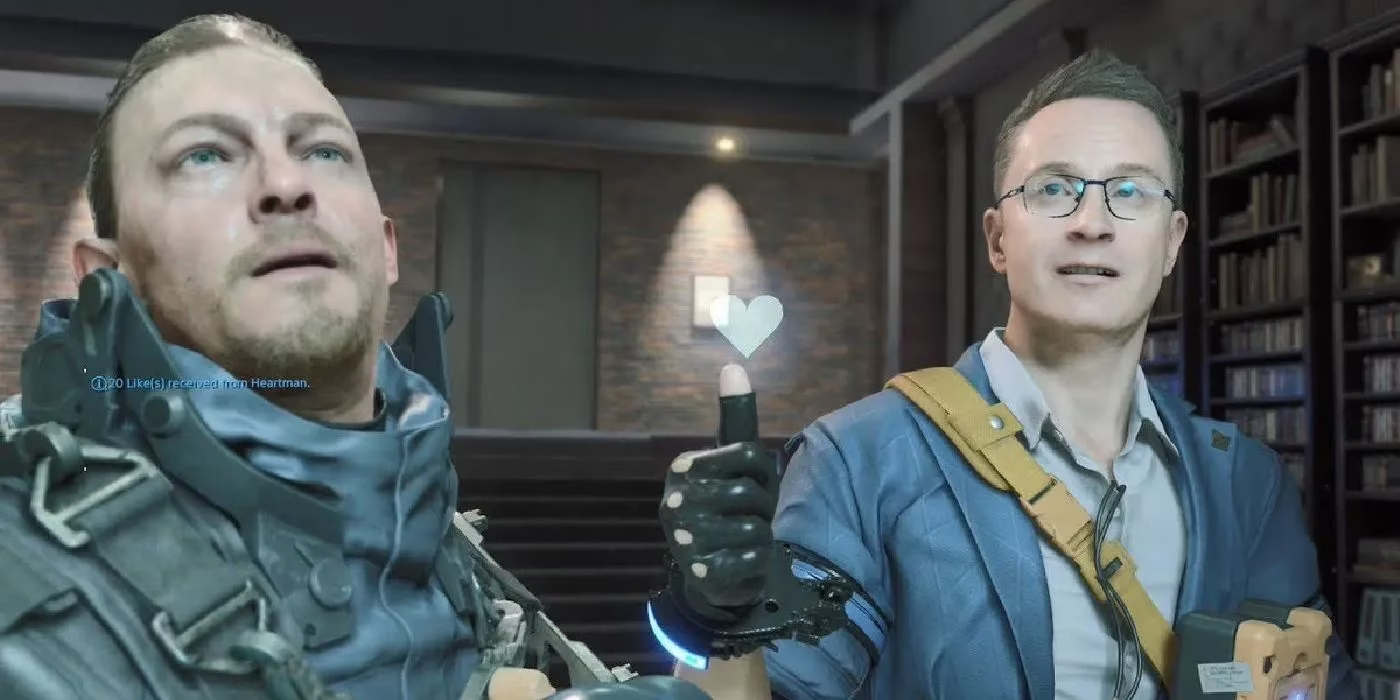
Heartman's story particularly resonated with me. His tragedy—losing his family during heart surgery when voidouts struck—and his subsequent ritual of stopping his heart every 21 minutes to search for them on the beach was one of gaming's most poignant character arcs. His conclusion that "everyone's beach is unique" and that death wouldn't reunite him with his family was both heartbreaking and beautifully philosophical. These character stories were like finding perfectly preserved fossils in sedimentary rock—each layer revealed more about the world and our place in it.
What Death Stranding 2 Could Bring
As we approach Death Stranding 2's release, I have several hopes for how the sequel will evolve the formula:
-
Enhanced asynchronous gameplay: Building on the community aspects while introducing new ways to connect
-
Deeper character stories: Maintaining the emotional complexity that made the original's cast so compelling
-
Expanded environmental interaction: Making the journey itself even more engaging and dynamic
-
More personal moments: Allowing players to create their own meaningful experiences within the framework
Kojima has described the original Death Stranding as the first "strand game," and I'm curious to see how this concept develops. The asynchronous multiplayer could evolve in fascinating ways—perhaps players could leave more complex messages, collaborate on larger projects, or even experience echoes of each other's journeys in more direct ways.
The world of Death Stranding felt both empty and full simultaneously. The loneliness of the mountains and valleys made the rare face-to-face encounters with characters feel precious and significant. These moments were complemented by holographic conversations that, while technologically advanced, somehow felt more intimate than many "real" conversations in other games. It was like watching shadows dance on a cave wall—you knew they weren't the real thing, but they told you everything you needed to know about what was casting them.
The Legacy of Quiet Games
In an era where many games prioritize constant action and stimulation, Death Stranding dared to be different. Its deliberate pace and focus on traversal as gameplay created space for thought and emotion. As I anticipate the sequel, I hope it maintains this commitment to being a "quiet" game in a noisy medium.
The original game's structure—with long stretches of travel punctuated by intense story moments and character interactions—created a rhythm that felt true to its themes of connection across distance. If Death Stranding 2 can preserve this while introducing meaningful innovations, it could once again redefine what we expect from narrative-driven games.
What excites me most is the potential for new stories in this universe. The beach, the chiral network, the BT phenomenon—all these elements provide rich ground for exploration. And if Kojima's track record is any indication, we can expect characters whose tragedies and triumphs will stay with us long after the credits roll.
As 2026 approaches and Death Stranding 2 continues development, I find myself ready to once again take up the cargo and make connections across broken landscapes. The journey may be long, the terrain difficult, and the enemies both visible and invisible—but that's precisely what makes it worth undertaking. After all, in a world fractured by catastrophe, sometimes the most revolutionary act is simply to keep walking, to keep delivering, to keep connecting.