Death Stranding 2: How a Darker Narrative Could Introduce Invasions and Redefine Connection
Death Stranding 2's anticipated gameplay shift from altruistic cooperation to incentivized sabotage and invasion mechanics could fundamentally reshape its narrative and player experience.
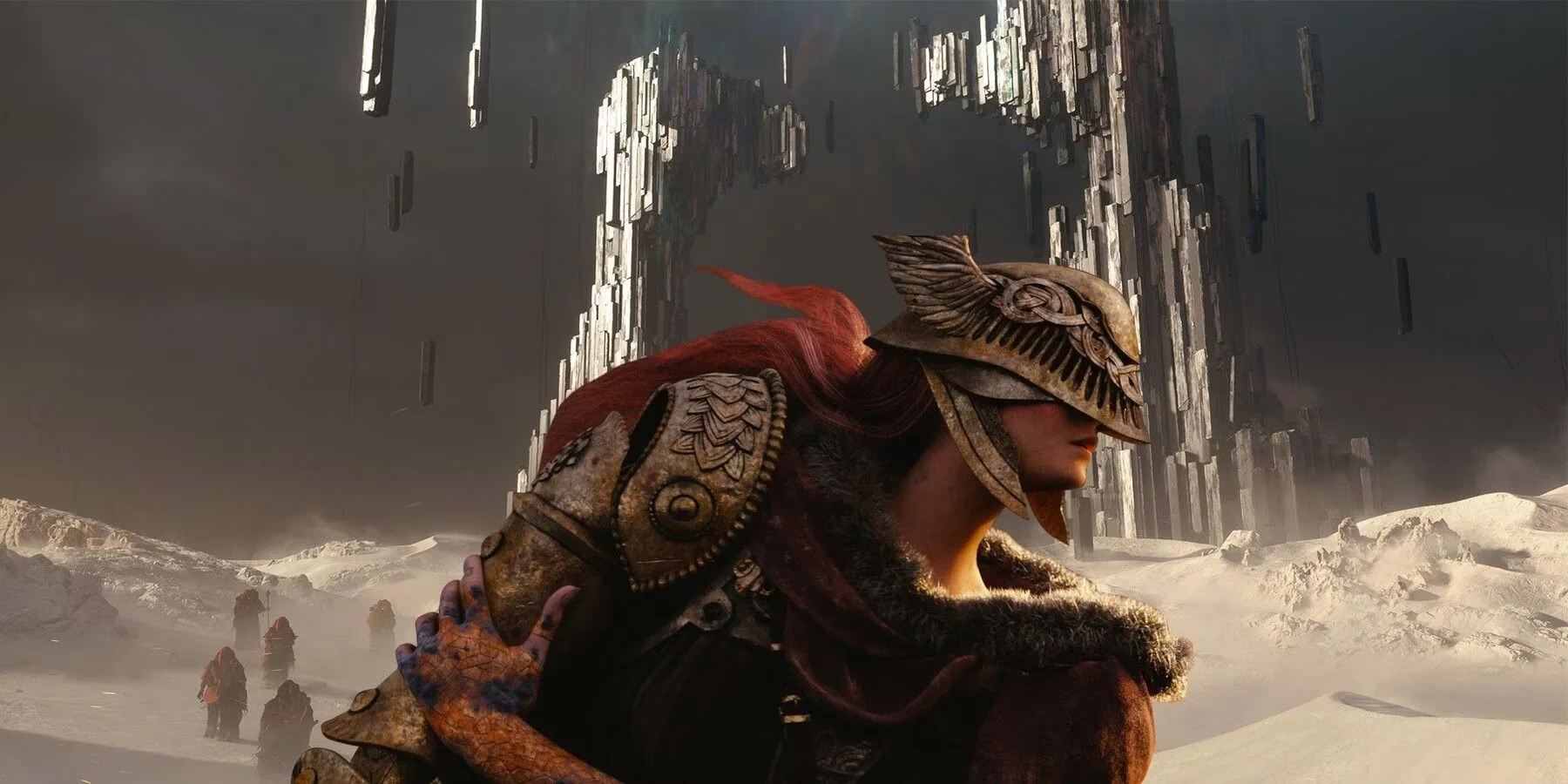
As of 2026, the anticipation for Hideo Kojima's Death Stranding 2 continues to build, with fans expecting a significant thematic shift from its predecessor. The first game, famously re-written during the COVID-19 pandemic, championed the idea of reconnection. However, the sequel is poised to question whether that reconnection was ultimately beneficial for humanity. This pivot towards a darker, more ambiguous narrative suggests a profound change in tone, one that could fundamentally reshape the gameplay experience. Instead of a hopeful journey of building bridges, players might find themselves in a world where connection is a double-edged sword, fraught with danger and betrayal.
From Cooperation to Sabotage: A New Gameplay Loop
One of the most drastic potential changes involves the core gameplay loop. In the original Death Stranding, players were rewarded for altruism—leaving ladders, ropes, and structures to aid fellow Porters in Bridges. Death Stranding 2 could flip this concept entirely. Imagine a system where players are incentivized not to help, but to hinder. The game could reward actions that add challenges to other players' worlds, such as:
-
Leaving deliberate traps on commonly used paths.
-
Sabotaging shared structures like postboxes or timefall shelters.
-
Creating obstacles that force other Porters to take dangerous detours.
This shift aligns perfectly with the sequel's rumored darker theme. If connection is now seen as potentially harmful, then gameplay mechanics that encourage isolation or conflict would be a natural extension. Alongside new "Strand-Type" features designed to complicate rather than simplify journeys, Kojima might look to another iconic source for inspiration: the invasion mechanics of FromSoftware's Elden Ring and other Soulsborne titles.
The Invasion Mechanic: Borrowing from Elden Ring
For the uninitiated, the invasion system in games like Elden Ring allows one player to forcibly enter another player's world as a hostile entity, often with the sole goal of hunting them down. This mechanic creates unpredictable, tense, and sometimes terrifying encounters.
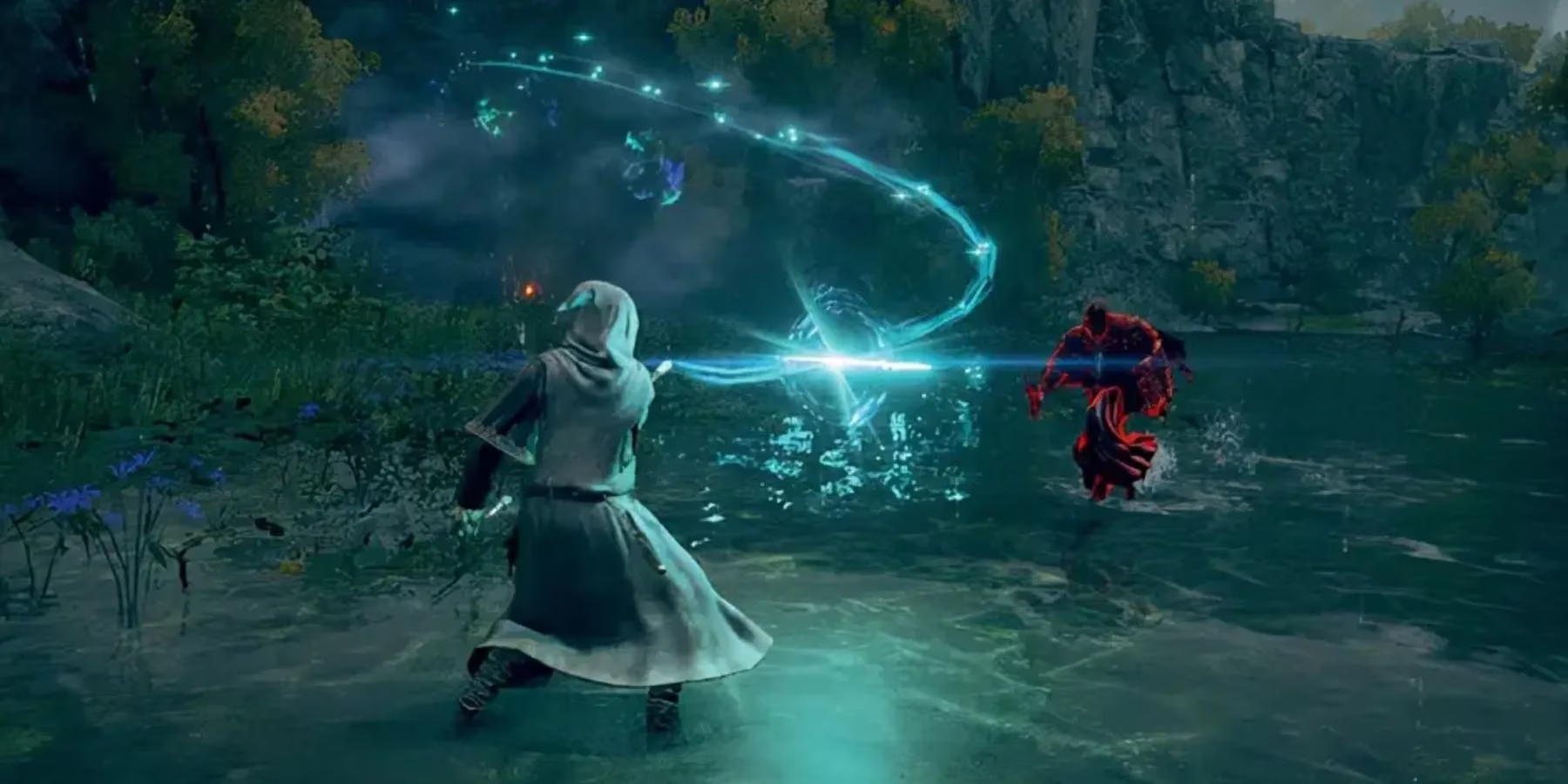
How could this work in the world of Death Stranding 2? The ethereal red phantom would be replaced by something more thematically appropriate. An invader might appear as:
-
A rogue, generic Porter driven by malice.
-
A member of a hostile faction, perhaps remnants of Higgs's forces.
-
A corrupted MULE, acting with more intelligence and purpose.
The invader's objective would be clear: disrupt Sam Porter Bridges's delivery mission by any means necessary. This wouldn't just be about direct combat; it would be about psychological warfare and environmental sabotage.
Potential Tools for an Invader
An invader in Death Stranding 2 would have a unique arsenal designed to exploit the game's core systems. Their goal isn't just to kill Sam, but to make his journey a living nightmare. They could utilize tools such as:
| Tool | Potential Effect |
|---|---|
| BT Attractor | Lures terrifying Beached Things (BTs) directly into Sam's path or resting area. |
| Road Spike Trap | Sabotages paved roads, causing vehicle damage or forcing Sam to proceed on foot. |
| Package Disruptor | Temporarily scrambles the tracking or integrity of carried cargo. |
| Fake Structure | Places a decoy shelter or postbox that malfunctions or triggers an alarm. |
| Environmental Hazard | Triggers a localized timefall storm or creates a rockslide. |
Of course, for balance, Sam would need robust ways to fight back. He could use weapons to repel or temporarily disable invaders, set up defensive perimeter alarms, or even use the terrain to his advantage. The key is that the invader should be a formidable obstacle, not an unstoppable force.
Co-op vs. Conflict: Striking the Right Balance
While the idea of "friendly" invasions or full co-op exploration is tempting—echoing some positive Elden Ring experiences—it might dilute Death Stranding 2's intended message. Sam's solitary, atmospheric journey is a hallmark of the series. Having another player physically present could prove distracting from the narrative and the haunting loneliness of the landscape.
Furthermore, the experimental asynchronous multiplayer of the first game, where players indirectly aid each other, could lose its impact if replaced by direct co-op. The beauty was in the anonymous, delayed connection—a gift from a stranger. Replacing that with a real-time partner placing a ladder for you is a different, arguably less unique, feeling. Therefore, the invasion system should primarily focus on hostile interactions to reinforce the new theme that connection can be dangerous.
Preserving the Core Experience: Optionality is Key
Assuming Death Stranding 2 retains moments of serene, contemplative gameplay, making invasions optional would be crucial. Players should have a clear setting to enable or disable this feature. Why? 🤔
-
Some players may simply want to unwind and enjoy the breathtaking scenery.
-
Others might wish to listen to the soundtrack and immerse themselves in the story without interruption.
-
New players learning the complex systems could do so without the added pressure of a human hunter.
For those seeking end-game content or a fresh, dynamic challenge after completing the main story, however, enabling invasions would be perfect. Each session would become unpredictable. One delivery might be peaceful, while the next becomes a tense cat-and-mouse game across rocky ravines. This optional system caters to both playstyles, ensuring the game can be a relaxing odyssey or a nerve-wracking test of survival.
Ultimately, the introduction of an invasion-like mechanic in Death Stranding 2 would be more than just a gameplay addition; it would be a narrative device made interactive. It would physically manifest the sequel's core question about the perils of connection. Every time a player chooses to enable this feature, they are willingly inviting uncertainty and potential betrayal into their world, perfectly mirroring the complex themes Hideo Kojima seems to be exploring. As development continues on the PS5, this potential direction highlights how the sequel is not just continuing a story, but challenging the very philosophy its predecessor established.