Death Stranding 2: My Journey Through Hideo Kojima's Weird and Wonderful World
Death Stranding delivers a haunting, mind-bending journey for players, redefining the walking simulator genre with surreal storytelling and anticipation for Death Stranding 2.
Let me tell you, being a Death Stranding player is like being a dedicated member of a cult where the initiation ritual involves delivering packages for 60 hours while a ghost baby coos at you from a jar. When I first booted up Hideo Kojima's 2019 masterpiece (or confusing mess, depending on who you ask), I felt like I'd stumbled into a dream where someone had combined a FedEx simulator with a David Lynch film. Now, in 2026, with Death Stranding 2 lurking somewhere in the development shadows, I find myself looking back at that bizarre journey and wondering what fresh, mind-bending weirdness awaits us.
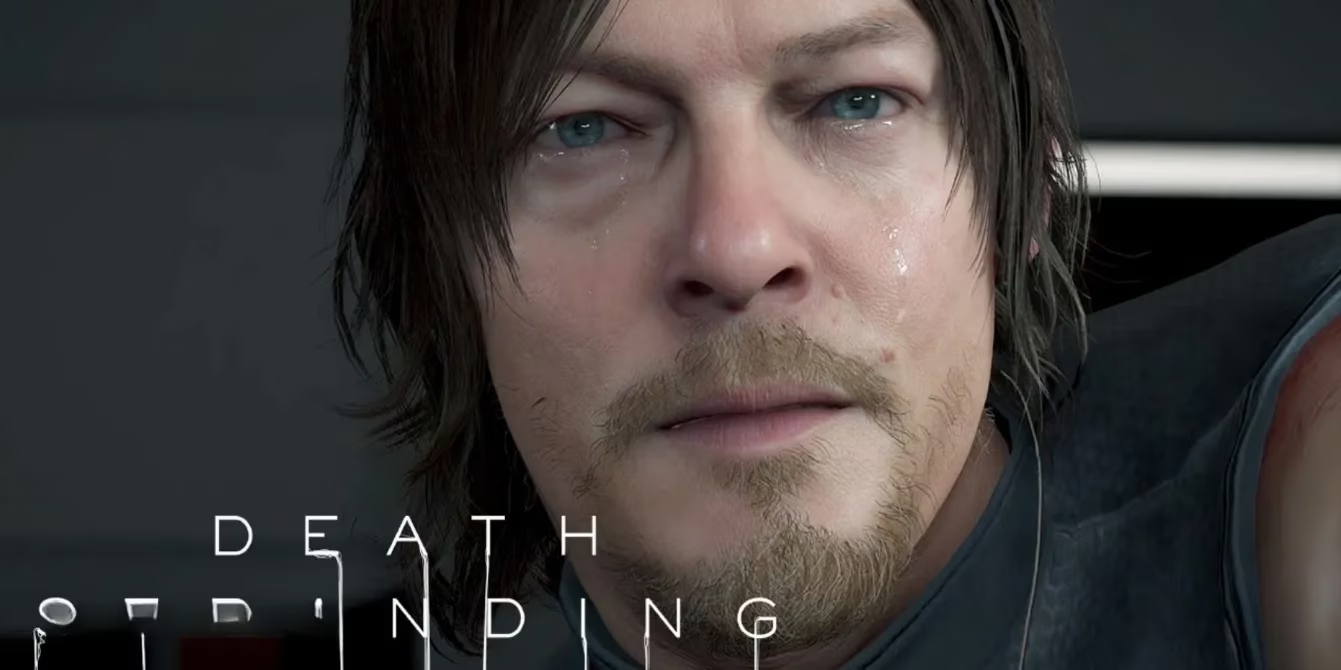
The Game That Redefined 'Walking Simulator'
I remember the pre-release hype. Trailers showed Norman Reedus naked on a beach with ghostly handprints, and we all nodded sagely as if we understood. "Ah yes," we said, "profound." Then the game launched and the gaming community split faster than an atom in a particle accelerator. On one side: those who found meditative peace in carefully planning a route to avoid rain that aged your cargo. On the other: those who wondered why they'd paid $60 for what felt like an extremely stressful hiking trip with occasional diaper-changing mechanics.
Death Stranding's world was a beautiful, haunting place - a post-apocalyptic United States shattered by the 'Death Stranding' event that blurred lines between life and death. My job as Sam Porter Bridges? Reconnect isolated cities by... delivering stuff. That's it. That's the core gameplay loop. And yet, Kojima Productions somehow made checking a cargo balance sheet feel as tense as a stealth mission in Metal Gear Solid. The game's focus on traversal and strategic planning over traditional action was like being given a Formula 1 car and then being told the objective was to drive it as slowly and carefully as possible without spilling the tea in the passenger seat.
That Ending, Though
After what felt like 300 hours of delivering sensitive materials and building bridges (literal and metaphorical), the story reached its conclusion. The final hours peeled back layers of Sam's origin like an onion that made you cry both from emotion and confusion. By the end, Sam cut ties with the Bridges organization and rode off into the sunset with his BB (Bridge Baby) Lou. The impending cataclysmic event was postponed, not solved. Most stories would have wrapped things up neatly here, but this is Kojima we're talking about - the man who could find a way to make a sequel to a sunrise.
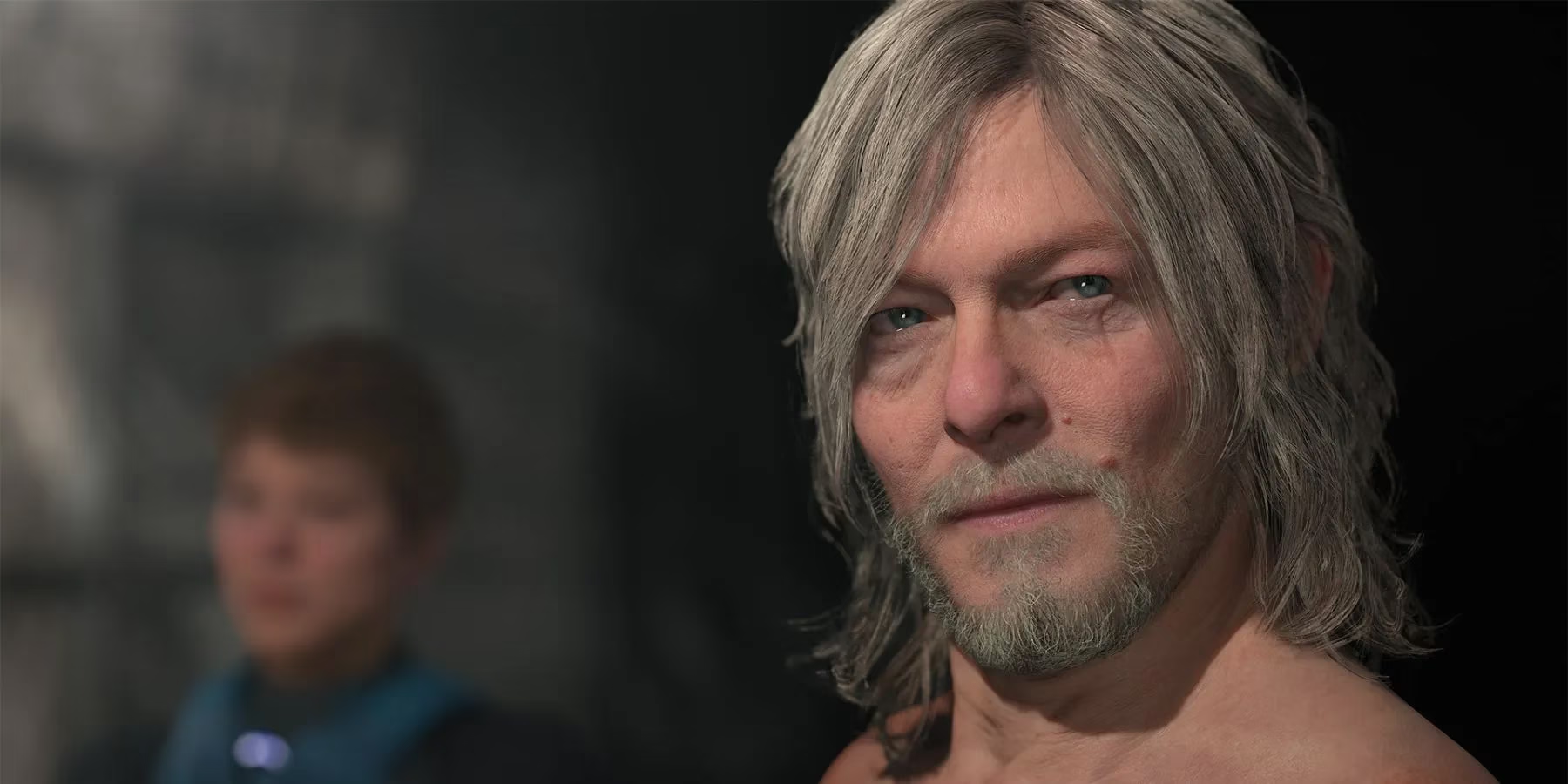
The Sequel: Another Dose of Confusion
Now Death Stranding 2 is brewing in whatever cauldron Kojima uses to cook up his ideas (probably one that occasionally speaks in riddles). The cinematic trailer showed us an older Sam Porter, suggesting a significant time jump. It also showed what appears to be a fanatic cult, because if there's one thing the post-apocalypse needs more of, it's organized groups with questionable beliefs.
What do we know about gameplay? Absolutely nothing! The trailer was about as informative as trying to read a book by smelling its cover. Will there be more action? Will the delivery mechanics be refined? Will we get to play as the BB pod? Your guess is as good as mine. The developers have been tighter with details than a crypt keeper with trust issues.
Here's what the gaming community is speculating about Death Stranding 2:
| What We Want | What We'll Probably Get |
|---|---|
| More combat mechanics | More intricate cargo stacking systems |
| Explanation of the Beach | A new, even more confusing metaphysical concept |
| Co-op delivery missions | The ability to send passive-aggressive messages to other players' structures |
| Less cutscenes | Longer cutscenes with more celebrity cameos |
Why I'm Strangely Excited
Despite my jokes, there's something genuinely special about Death Stranding that makes me anticipate the sequel. The first game was like trying to assemble IKEA furniture without instructions while someone whispers existential philosophy in your ear - frustrating, confusing, but somehow rewarding when you finally get that shelf to stand up. Its emphasis on connection (building structures that help other players, leaving encouraging signs) created a unique multiplayer experience that felt like asynchronous kindness in a digital wasteland.
Kojima's vision is as subtle as a fireworks display in a library - you can't ignore it, even if you're not entirely sure what it's celebrating. Death Stranding 2 represents another chance to step into a world that plays by its own bizarre rules, where the simple act of walking from point A to point B becomes an epic journey of balance management, terrain analysis, and occasional supernatural terror.
So here I am in 2026, still thinking about that ghost baby in a jar, still wondering about the chiral network, and still ready to pre-order Death Stranding 2 the moment it's available. Because in a gaming landscape filled with safe sequels and familiar formulas, Kojima's creations are like finding a perfectly cooked steak at a vegan restaurant - unexpected, possibly against the rules, and utterly memorable. Now if you'll excuse me, I need to practice my virtual backpack-packing skills. Those packages aren't going to deliver themselves... though honestly, in Kojima's world, they probably might in the sequel.