Hideo Kojima's OD: A Cinematic Horror Experience Blurring the Lines Between Film and Game
OD, Hideo Kojima's new horror game, redefines interactive entertainment with cinematic storytelling and genre innovation in gaming.
Hideo Kojima, the visionary mind behind Death Stranding, is once again preparing to challenge the very definition of interactive entertainment. His upcoming project, OD, is shaping up to be one of his most unusual and ambitious creations yet. Based on the initial trailer and Kojima's own statements, this horror experience seems poised to exist in a unique space between traditional video games and cinematic storytelling. It promises a journey that is as unsettling as it is innovative, continuing Kojima's legacy of pushing creative boundaries in the gaming industry.
A Collaboration of Visionary Minds
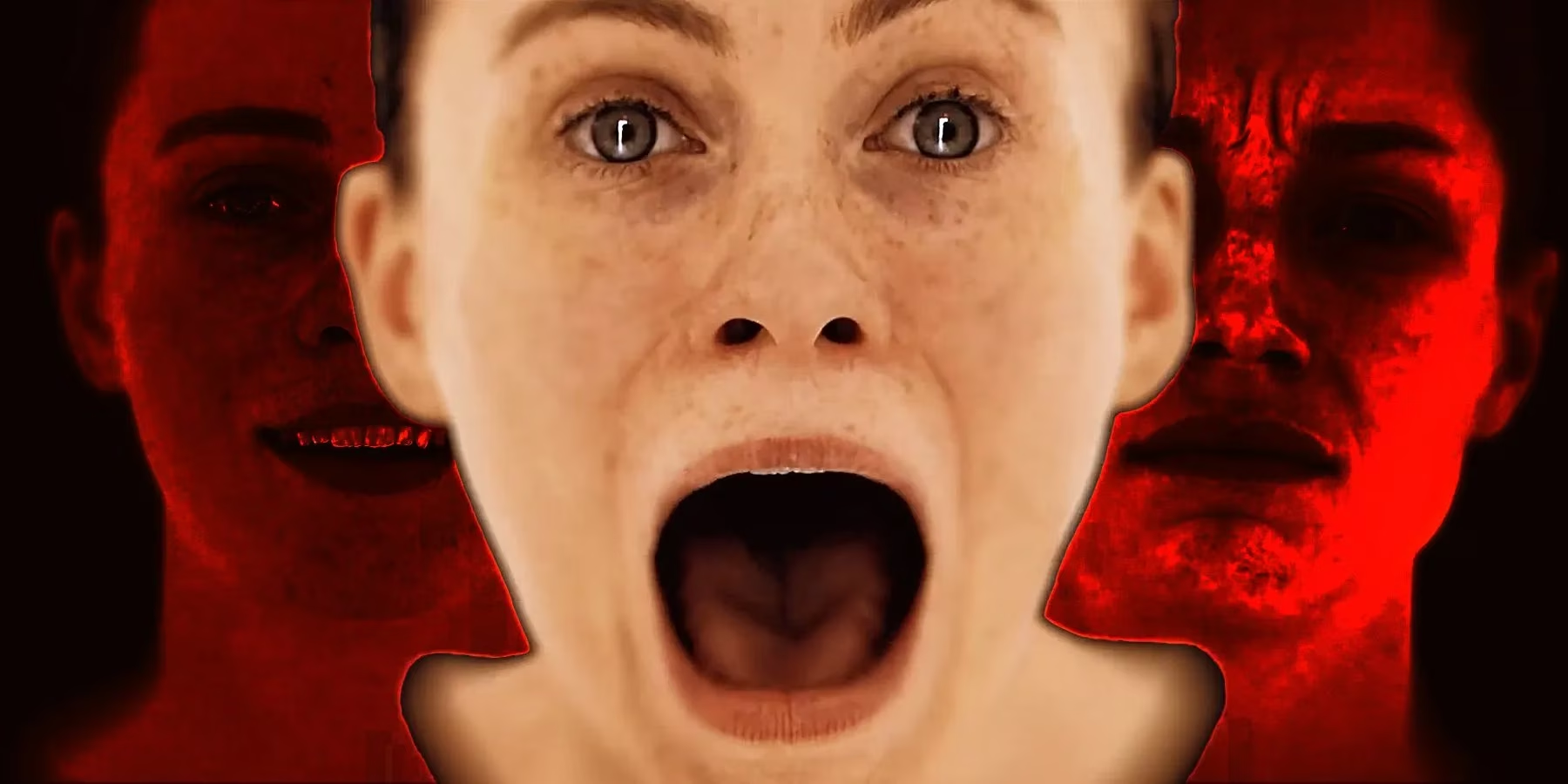
OD is being developed by Kojima Productions with a fascinating creative partnership at its core. Hideo Kojima is collaborating with acclaimed writer and filmmaker Jordan Peele, whose own work in horror (Get Out, Us, Nope) has redefined the genre in recent years. This combination of talents suggests that OD will deliver a horror experience unlike anything players have encountered before. The first trailer, released in late 2023, already demonstrated their unconventional approach—it was entirely live-action, featuring actors Sophia Lillis, Hunter Schafer, and Udo Kier delivering cryptic dialogue that left viewers with more questions than answers.
Kojima has made several bold promises about OD that have generated both excitement and concern within the gaming community. Most notably, he has strongly suggested that OD will contain even more cinematic cutscenes than Death Stranding, which itself featured approximately seven hours of non-interactive story sequences. This revelation has sparked debates about what exactly constitutes a "game" versus an "interactive film."
Transcending Medium Boundaries
Kojima's stated goal for OD is to "transcend the barriers between film and video games." This ambition is evident in every aspect of the project revealed so far. The use of live-action footage, professional actors, and cinematic techniques suggests that OD might play out more like a horror film that players occasionally interact with, rather than a traditional horror game where gameplay is paramount. This approach represents both a tremendous opportunity and a significant risk.
Potential Advantages of the Cinematic Approach:
-
Enhanced Immersion: Seeing real actors react to horrific situations could create a more visceral, believable恐怖 experience than animated characters
-
Artistic Cohesion: A stronger cinematic vision might allow for more controlled pacing and atmospheric tension
-
Storytelling Depth: Extended cutscenes could facilitate more complex character development and narrative nuance
-
Genre Innovation: Blending mediums could create entirely new types of emotional and psychological experiences
The Risk of Passive Experience
However, this cinematic focus raises legitimate concerns about gameplay. Death Stranding already faced criticism from some quarters for its gameplay loop, which detractors labeled as little more than a "walking simulator." If OD leans too heavily into cinematic presentation at the expense of meaningful interaction, it could face even harsher criticism. The fundamental question becomes: if players are mostly watching rather than playing, does it still qualify as a game? Kojima will need to carefully balance these elements to avoid creating what some might perceive as an overly passive experience.
The Nature of OD's Horror
What type of horror can players expect from this unique collaboration? Given the track records of both Kojima and Peele, OD is likely to focus on psychological恐怖 and unsettling atmospheres rather than simple jump-scares. Both creators have demonstrated a preference for horror that lingers in the mind, that creates unease through implication and subtext rather than explicit violence. The cryptic dialogue in the trailer—"The hungry purple dinosaur ate the kind, zingy fox, the jabbering crab, and the mad whale and started vending and quacking"—suggests a surreal, dreamlike quality to the恐怖 that awaits.
Possible Horror Elements in OD:
| Element | Likelihood | Potential Impact |
|---|---|---|
| Psychological恐怖 | Very High | Creates lasting unease and intellectual engagement |
| Body Horror | Moderate | Could be enhanced by live-action presentation |
| Existential Dread | High | Fits both creators' thematic interests |
| Social Commentary | Very High | Jordan Peele's specialty, likely incorporated |
| Supernatural Elements | Unknown | Could range from subtle to overt |
The Future of Interactive Storytelling
As we look toward OD's eventual release (likely in 2026 or 2027), it represents more than just another horror game. It stands as a test case for whether truly hybrid experiences can succeed in the mainstream gaming market. Kojima's willingness to experiment with form and medium has always been his defining characteristic, and OD appears to be his most radical experiment yet.
Key Questions Awaiting Answers:
-
How will gameplay be integrated? Will there be traditional game mechanics, or something entirely new?
-
What's the ratio of interaction to observation? This will determine whether it feels more like a game or film
-
How will choices affect the narrative? If at all—this could be a completely linear experience
-
What technological innovations will support the vision? The game is being developed in partnership with Xbox Game Studios, suggesting possible technical advancements
Balancing Act Between Mediums
The success of OD will likely depend on finding that elusive sweet spot between cinematic storytelling and interactive engagement. Too much emphasis on cutscenes risks alienating players who want agency, while too much focus on gameplay might dilute the carefully crafted恐怖 atmosphere. Kojima has proven adept at finding this balance before—Death Stranding, for all its cutscenes, featured deeply satisfying gameplay systems for those willing to engage with them. The challenge with OD is that it seems to be pushing even further toward the cinematic end of the spectrum.
The Legacy of Experimental Games
OD joins a lineage of games that have attempted to blend film and interactive media, with varying degrees of success. Titles like David Cage's games (Heavy Rain, Detroit: Become Human) and Telltale's narrative adventures have explored similar territory, but none with the budget, talent, or ambition that OD appears to possess. What sets OD apart is the specific combination of Kojima's game design sensibilities with Peele's horror storytelling expertise, all wrapped in a package that seems deliberately designed to defy easy categorization.
Conclusion: An Uncertain but Fascinating Future
As development continues on OD, the gaming community watches with a mixture of anticipation and skepticism. Kojima's track record suggests that even if the final product is controversial, it will undoubtedly be interesting. The collaboration with Jordan Peele adds another layer of credibility to the project's horror aspirations, while the cinematic approach represents either a bold step forward for interactive storytelling or a potential misstep in understanding what players want from their games.
One thing is certain: when OD finally releases, it will be a talking point within the industry, regardless of whether it succeeds or fails. It represents the kind of creative risk-taking that has become increasingly rare in big-budget game development, and for that alone, it deserves attention. Whether it ultimately transcends the barriers between film and video games or simply demonstrates why those barriers exist remains to be seen, but the journey there promises to be as compelling as the destination.