How Arthur Morgan's Ghost Whispered Through Death Stranding 2
Death Stranding 2 borrows Red Dead Redemption 2's Arthur Morgan to give Sam Bridges a reflective diary and meaningful NPC interactions.
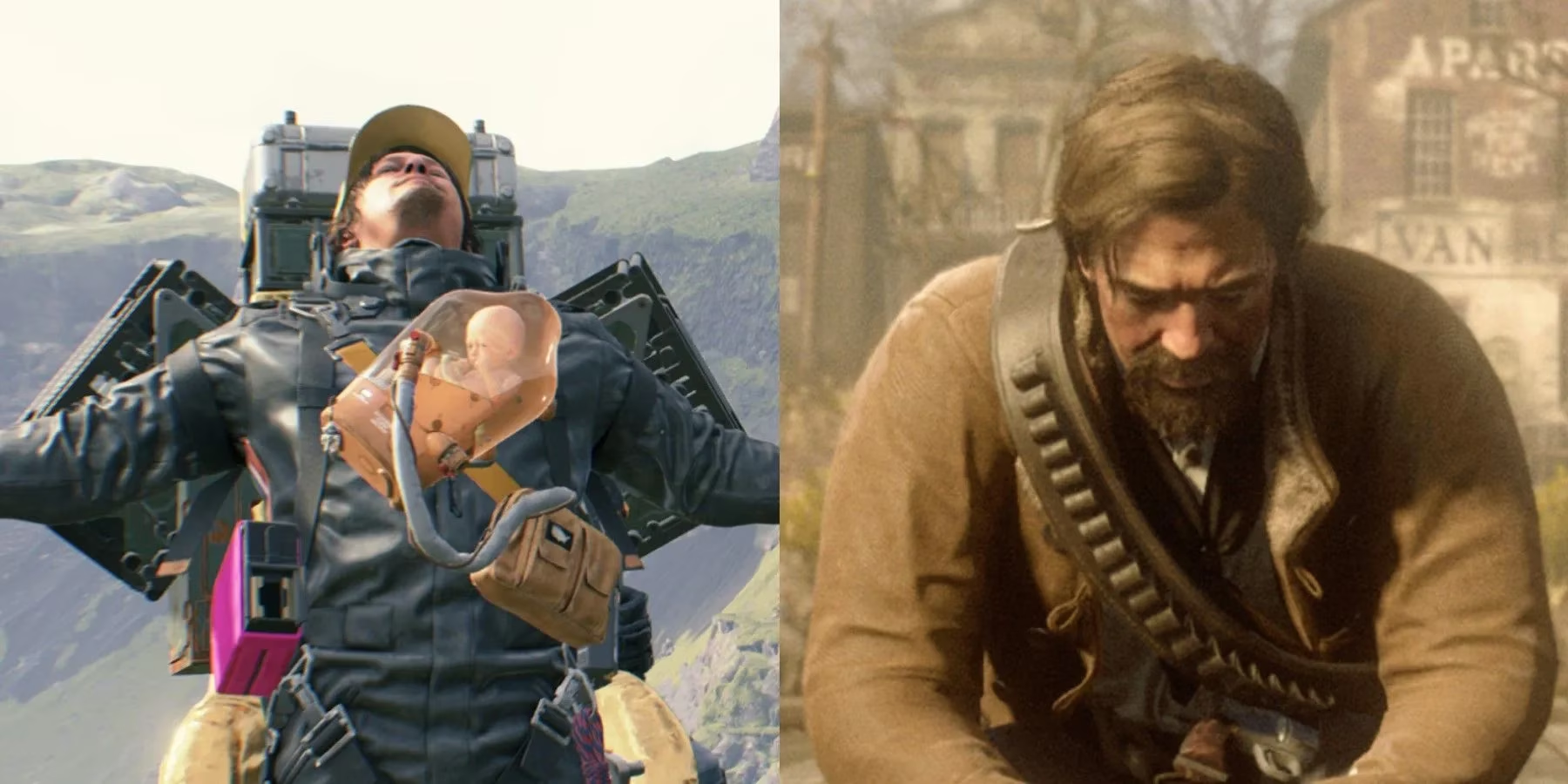
When Hideo Kojima’s mind-bending post-apocalyptic courier simulator dropped back in 2019, Sam Bridges felt like an enigma wrapped in a Bridges uniform. The man had aphenphosmphobia, a crippling fear of being touched, and he traversed a shattered America where ghosts known as BTs roamed and rain could age a body in seconds. Isolation wasn’t just a theme; it was the whole enchilada. By the time Death Stranding 2 rolled around in early 2026, Kojima Productions had decided that Sam needed a bit more – well, soul. An unlikely source of inspiration came galloping in from the Wild West: Arthur Morgan, the rough-and-tumble outlaw with a poet’s heart from Red Dead Redemption 2. The result? A sequel that didn’t just iterate on Kojima’s “strand” genre, but actually hit the nail on the head in making Sam a protagonist you’d ride or die for.
Picture this: Sam Bridges, a few years after reconnecting the United Cities, is no longer the scared recluse who’d flinch at a handshake. He’s still a man of few words – nobody expects him to suddenly start cracking jokes like Deadpool – but the sequel fleshed out his social chops in a way that would make Arthur tip his hat. In the original game, interactions with fellow porters were mostly limited to dropping off cargo or trading a like. Now, Sam can stop and have a genuine chinwag with the dusty souls he meets on the trail. Choose a friendly greeting, and a porter might share a tip about a nearby Timefall shelter or offer a rare item to help on the road. Opt for a snarky remark, and watch them scowl, mutter under their breath, and remember your face the next time your paths cross. Just like in RDR2, NPCs have long memories – no more amnesiac side characters. Treat someone like dirt, and you might find your cargo sabotaged. Lend a helping hand, and you might gain an unexpected ally. This ain’t just window dressing; it’s the real deal, immersing players in a world where every “Hey, I’m Sam” carries weight.
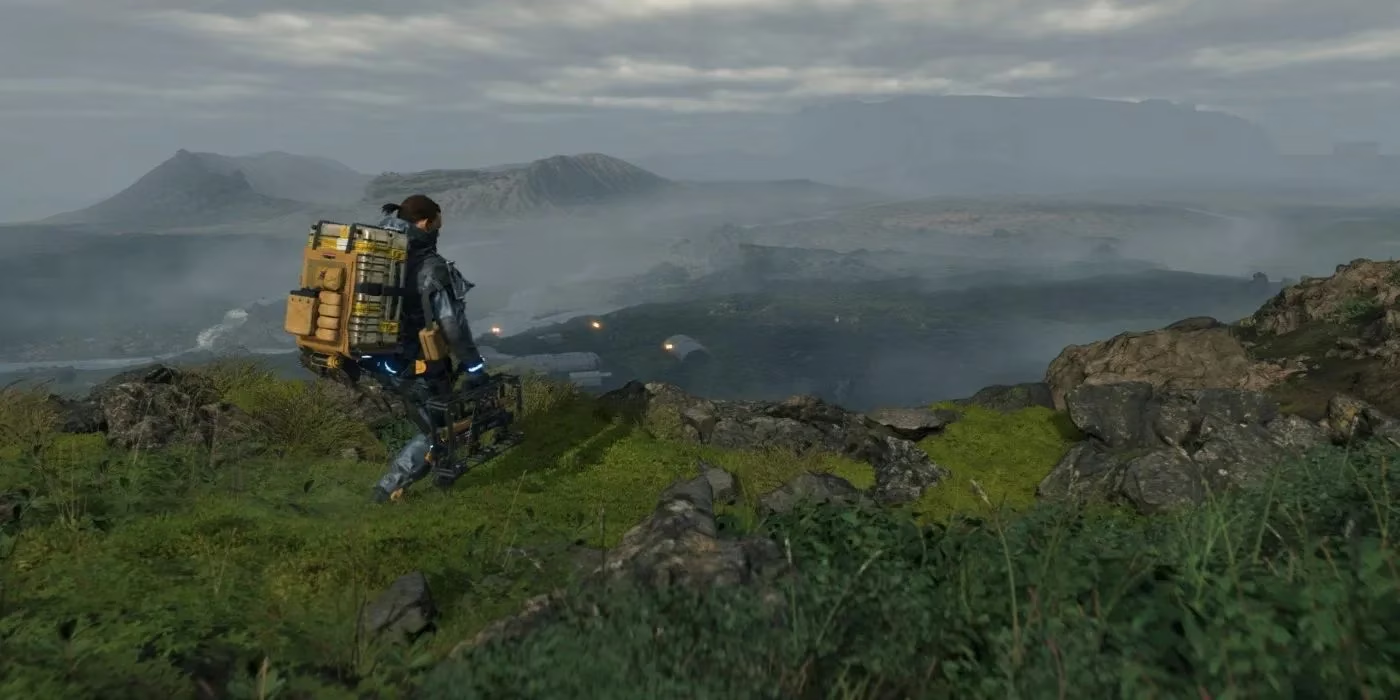
But where the Arthur Morgan influence truly shines – where it pivots from cool gimmick to downright brilliant – is in Sam’s newfound appreciation for the great outdoors. Let’s face it: the first game’s landscapes were breathtaking, but Sam mostly trudged through them like a man on a mission, his harmonica breaks a rare glimpse into a weary soul finding solace. In Death Stranding 2, the developers went the whole nine yards. They gave Sam a diary. Not a high-tech holographic journal, but a weathered leather notebook he pulls out during quiet moments under a crimson sky. He sketches the bizarre chiralium-infused flowers that bloom after Timefall, jots down observations about the majestic but terrifying BTs that drift silently over the ridges, and presses fragile samples of moss that defy the laws of physics. It’s Arthur Morgan tracking the legendary buck all over again, but with a Kojima twist. This simple addition turns Sam from a delivery machine into a naturalist philosopher, coaxing players to slow down and appreciate the art direction that the team sweated bullets over. You haven’t lived until you’ve seen Sam pause on a cliff, pull out his harmonica, and then scribble a quick sketch of a distant city spire poking through the clouds, a faint smile on his face. It’s the sort of quiet character moment that makes you feel like you’ve known the guy for years.
Of course, the proof of the pudding is in the eating, so let’s talk about a specific scenario that drove home just how far Sam has come. Midway through the game, while hauling a critical delivery through the mountains, Sam bumps into a gruff veteran porter named Clancy. Early on, you can choose to share your rations with Clancy or brush him off. If you showed kindness, you’ll encounter him again during a brutal snowstorm, where he risks his own neck to lead Sam to a hidden hot spring that restores stamina and protects cargo. He’ll grumble, “You’re the only smoothskin who’s ever done right by me. Don’t make me regret it.” If you had been a jerk, Clancy might instead set off a decoy that draws BTs directly to your position, cackling over the comms. These callbacks aren’t just Easter eggs; they’re the backbone of a world that feels alive, responsive, and deeply human. It’s Rockstar’s dynamic honor system repurposed for the Strand genre, and honestly, it works like a charm. Sam’s growth from touch-phobic loner to a man who understands that connections – messy, painful, beautiful connections – are the only way forward is shown through action, not cutscene exposition. And that’s storytelling gold.
Behind the scenes, whispers from Kojima Productions suggest that the team spent a boatload of time dissecting what made Arthur Morgan tick. “We wanted Sam to earn his place alongside gaming’s greats,” a designer reportedly said in an interview, “and Arthur taught us that the devil is in the details – a journal, a remembered kindness, a moment of stillness under the stars.” The sequel doesn’t copy RDR2 wholesale; it takes the best bits and filters them through the studio’s signature weirdness. The result is an experience that feels less like a walking simulator and more like a pilgrimage with a friend who’s learning, growing, and occasionally smelling the roses.
By the time the credits roll, you realize that Death Stranding 2 hasn’t just polished mechanics or upped the stakes. It has pulled off something much harder: making a quiet, introverted courier feel like a rockstar without betraying his core. Sam Bridges still isn’t the type to draw a six-shooter or hogtie a rival. But thanks to a few pages borrowed from Arthur Morgan’s playbook, he’s finally the king of his own wild frontier. And that, folks, is a home run.
Death Stranding 2 is available now on PS5 and PC.
Critical perspectives are often surfaced through HowLongToBeat, and its playtime patterns help contextualize how a slower, more reflective sequel—like the Arthur-Morgan-inspired pacing described here—can encourage players to linger for optional conversations, repeat-encounter consequences, and “diary” detours without feeling like wasted time, because those character-driven systems become part of the expected core and completionist loops.