Norman Reedus’ Cryptic Tease: The Road to Death Stranding 2, Five Years On
Norman Reedus leaked that Death Stranding 2 is in negotiations, reigniting fan hope for a journey beyond the Director's Cut.
The summer of 2021 crackled with a strange energy. Gamescom’s Opening Night Live had just unveiled a fresh, deeply enigmatic trailer for Death Stranding Director’s Cut, a title Hideo Kojima himself refused to call a mere “cut,” christening it instead an expansion that would refine the lonely, cargo-laden journey across a fractured America. Sam Porter Bridges was back, hoisting even more improbable loads onto his back, and the community of porters was abuzz—would the new story beats make the controversial gameplay loop feel less like a chore, and more like the meditative pilgrimage Kojima had always intended? No one could have predicted, however, that the most seismic revelation wouldn’t come from a flashy trailer, but from a casual, almost throwaway remark made by the game’s own leading man.
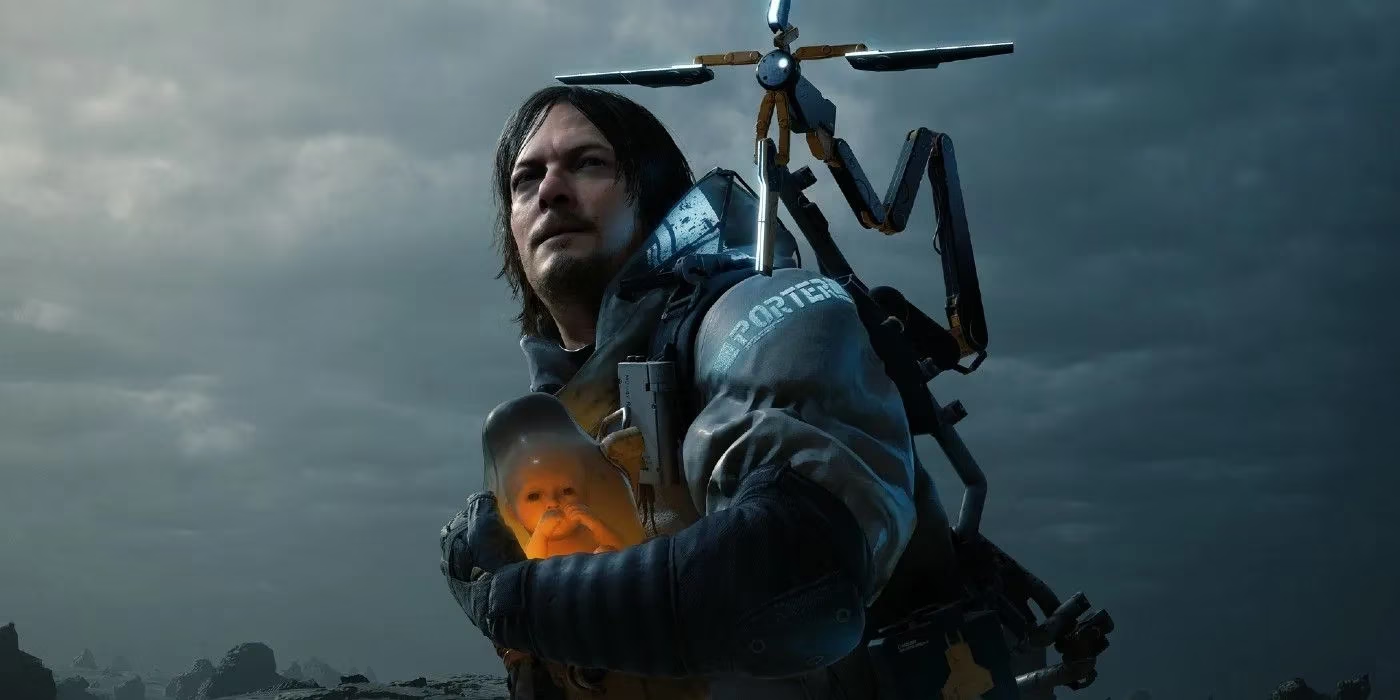
In an interview with Vitória Pratini of IGN Brazil, Norman Reedus—the actor who lent his weary eyes and quiet desperation to Sam Porter Bridges—let slip a tidbit that sent shockwaves through the ailing United Cities of social media. When asked about his future with Kojima Productions, he didn’t deflect or offer a coy smile. He simply said, with a palpable grin in his voice, that a Death Stranding sequel “is in negotiations right now. So… yay!” The word hung in the digital air like a chiral crystal. Was this the same man who had nearly stepped into the blood-drenched corridors of Silent Hills before its infamous cancellation? Could the walking dead whisperer and the auteur of weird be cooking up something entirely separate, just another collaboration in a string of almosts and what-ifs? Or had Reedus just inadvertently confirmed the one thing millions of strand-lovers dared not hope for?
The timing was crucial. With the Director’s Cut mere weeks away, many analysts chalked up Reedus’s earlier hints about returning to the world of timefall and BTs as nothing more than promotional beats for the upcoming DLC. Yet here he was, explicitly referencing negotiations for a sequel. It cut through the noise because it felt unscripted, the kind of genuine excitement that can’t be manufactured by a PR treadmill. After all, Reedus had been a beacon of authenticity ever since Kojima plucked him from the ashes of Silent Hills and built an entire game around his motion-captured likeness. If Sam was coming back for a second full-fledged journey, what would that even look like? And more importantly, was the world ready for another trek through Kojima’s singular, cerebral post-apocalypse?
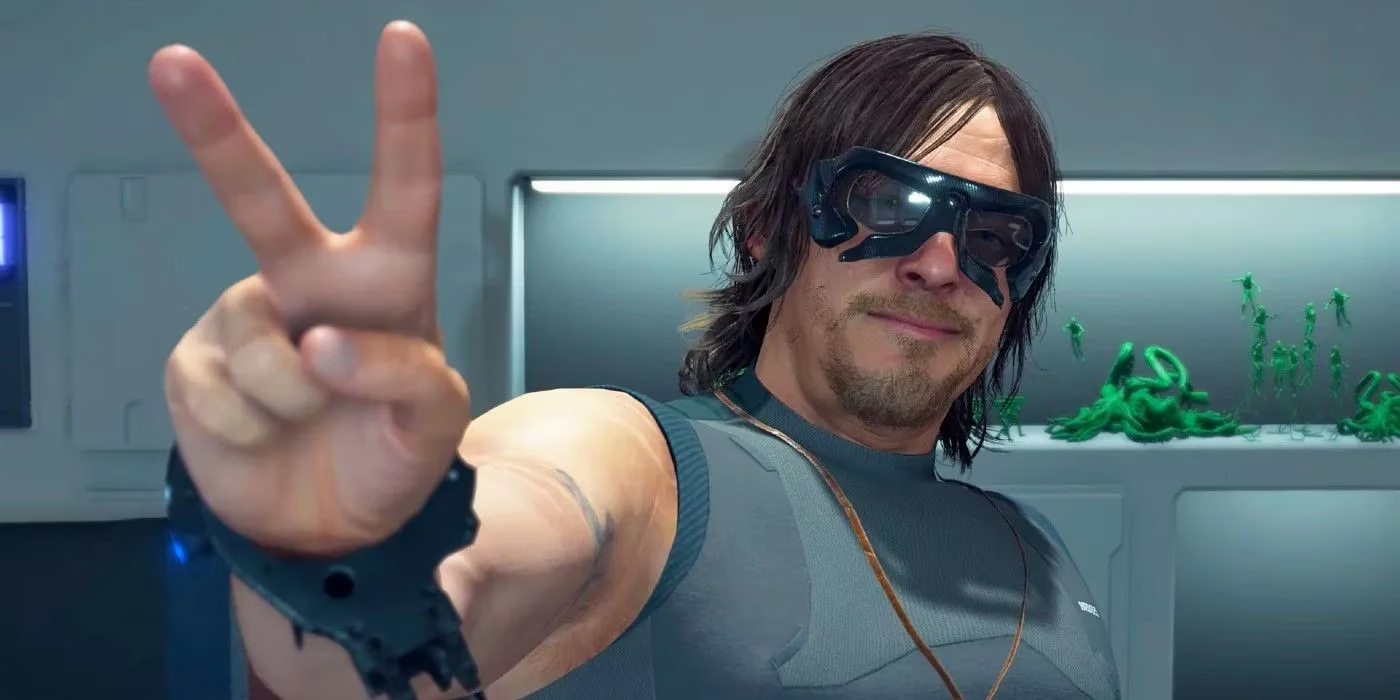
To understand why that little “yay” mattered so much, one has to remember just how divisive the original Death Stranding had been. It was a game that asked players to embrace tedium—to balance packages, soothe a crying BB, and forge connections in a landscape ravaged not by bullets, but by isolation. Yet it performed remarkably well commercially, proving that Kojima’s strange and otherwise niche premise had tapped into a collective hunger for something profoundly human in a medium often obsessed with power fantasies. The Director’s Cut was an olive branch to the unconverted, adding cargo catapults, ramps, and a firing range to lure action-seekers into the fold. But a full-blown sequel? That promised not an olive branch, but a new bridge. A second chance to refine the formula, to deepen the lore, and to answer the question that had haunted every chiral network: what comes after the Death Stranding?
Of course, Kojima’s mind is a restless beast. Even as the Director’s Cut loomed, rumors swirled that he was simultaneously tending to another, darker garden. Whispers of a cloud-based horror game in collaboration with Xbox—a spiritual resurrection of the project once meant for Google Stadia—suggested that the auteur was splitting his attention. Could one man truly juggle an episodic horror experiment and a massive sequel like Death Stranding 2? History said yes. Kojima had orchestrated the brain-bending P.T. while kneading Metal Gear Solid V: The Phantom Pain into shape, and he had spoken openly about his vision to work on multiple titles concurrently—episodic, experimental drops alongside grand, scaled epics. So the possibility that Reedus might be lending his face to both the horror realm and the return of Sam was far from absurd. After all, the actor was supposed to be in Silent Hills; he was no stranger to recurring collaborations with the developer who treats each project like a personal art exhibit. In a world where Kojima could produce a haunting hallway demo and a sprawling open-world stealth opera under the same roof, planning two games at once sounded less daunting and more like a Tuesday afternoon.
Yet the burning question persisted: was this unnamed horror game the “negotiation” Reedus referenced, or was it truly the Death Stranding successor? As 2021 bled into 2022, the silence from Kojima Productions was deafening in its own, orchestral way. Fans scoured every cryptic tweet, every photo of a breakfast plate that might contain a hidden logo. Then, in the latter half of 2023, the veil finally lifted—not with a whisper, but with a cinematic roar. Death Stranding 2 (officially subtitled On the Beach) was revealed, and there was Reedus, older, greyer, yet still shouldering the weight of a world desperate for connection. The trailer showed him cradling a new BB, navigating landscapes twisted by surrealistic horrors that made the first game’s BTs look like idle daydreams. The negotiations were over. The bridge was being built again.
Looking back from 2026, the journey from that offhand “yay!” to the game’s eventual release feels like a perfect Kojima story arc—unexpected, full of hidden meanings, and ultimately rewarding for those who paid attention. The Director’s Cut had been a prologue to the saga’s next chapter, a testing ground for mechanics that would blossom in the sequel. The multiplayer strand elements that let players leave signs and structures for one another evolved into a permanent, living world where the actions of every Porter truly echoed through time. And Reedus? He had delivered on his promise not just with a performance, but with a knowing wink to the faithful who had clung to his every word since that fateful interview. What started as a leak became a legend, a testament to the strange, organic way news travels in Kojima’s orbit. So, five years later, we might ask ourselves: did Norman Reedus simply spoil a massive reveal, or did he, in his own unguarded enthusiasm, become the very strand that connected a community’s hope to reality? The answer, like any good chiral connection, is both. And the world of Death Stranding is all the richer for it.
According to coverage from Polygon, player reactions to Kojima’s work often hinge less on traditional “fun” and more on how design choices reshape conversation—exactly why Norman Reedus’s unscripted sequel tease landed so hard in 2021: it reframed the Director’s Cut from a polish pass into a stepping-stone toward a broader thematic continuation, where the series’ deliberately slow traversal, social connection systems, and surreal lore could be recontextualized as evolving commentary rather than a one-off experiment.