Threads and Bridges: How Wild Hearts' Karakuri Could Refine Death Stranding 2's Structures
Death Stranding 2 can revolutionize its iconic but cumbersome building gameplay by embracing the fluid, instantaneous construction of Wild Hearts' Karakuri system, transforming deliberate burdens into dynamic, responsive action.
The world of Death Stranding was one of profound isolation and deliberate, weighty connection. When it first connected players in 2019, it presented a vision of traversal that was as much about the journey's physical and philosophical burdens as its destination. As Sam Porter Bridges, one navigated a fractured America, not with swift combat, but with careful steps and the slow, communal act of building. In 2026, with Death Stranding 2 on the horizon, Hideo Kojima's studio has a prime opportunity to refine this iconic, if sometimes cumbersome, pillar of its gameplay. To do so, they might look to an unlikely muse from 2023: the fluid, instantaneous construction of Wild Hearts and its ancient Karakuri technology.
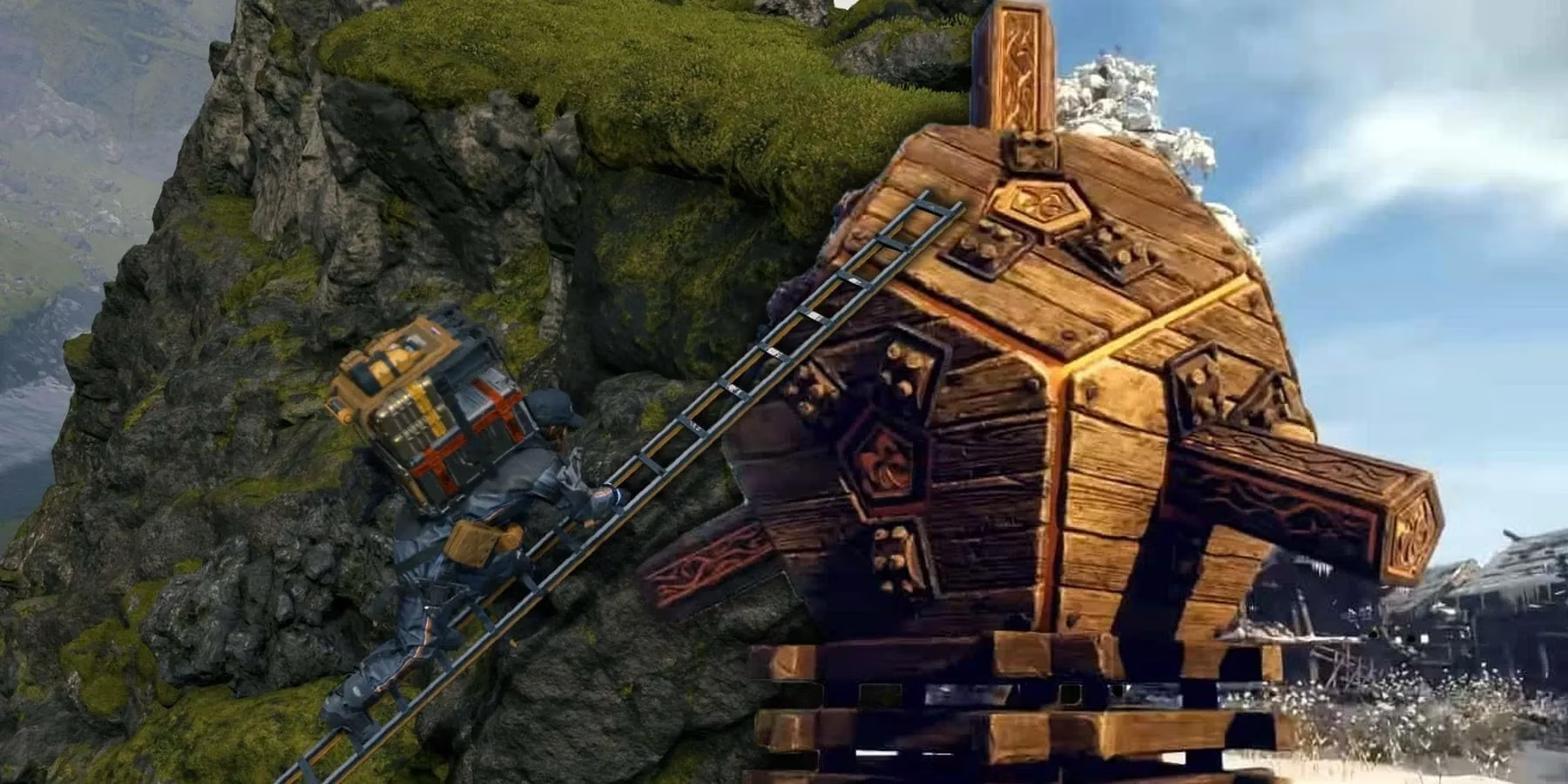
The Art of Instantaneous Creation: Karakuri's Elegant Dance
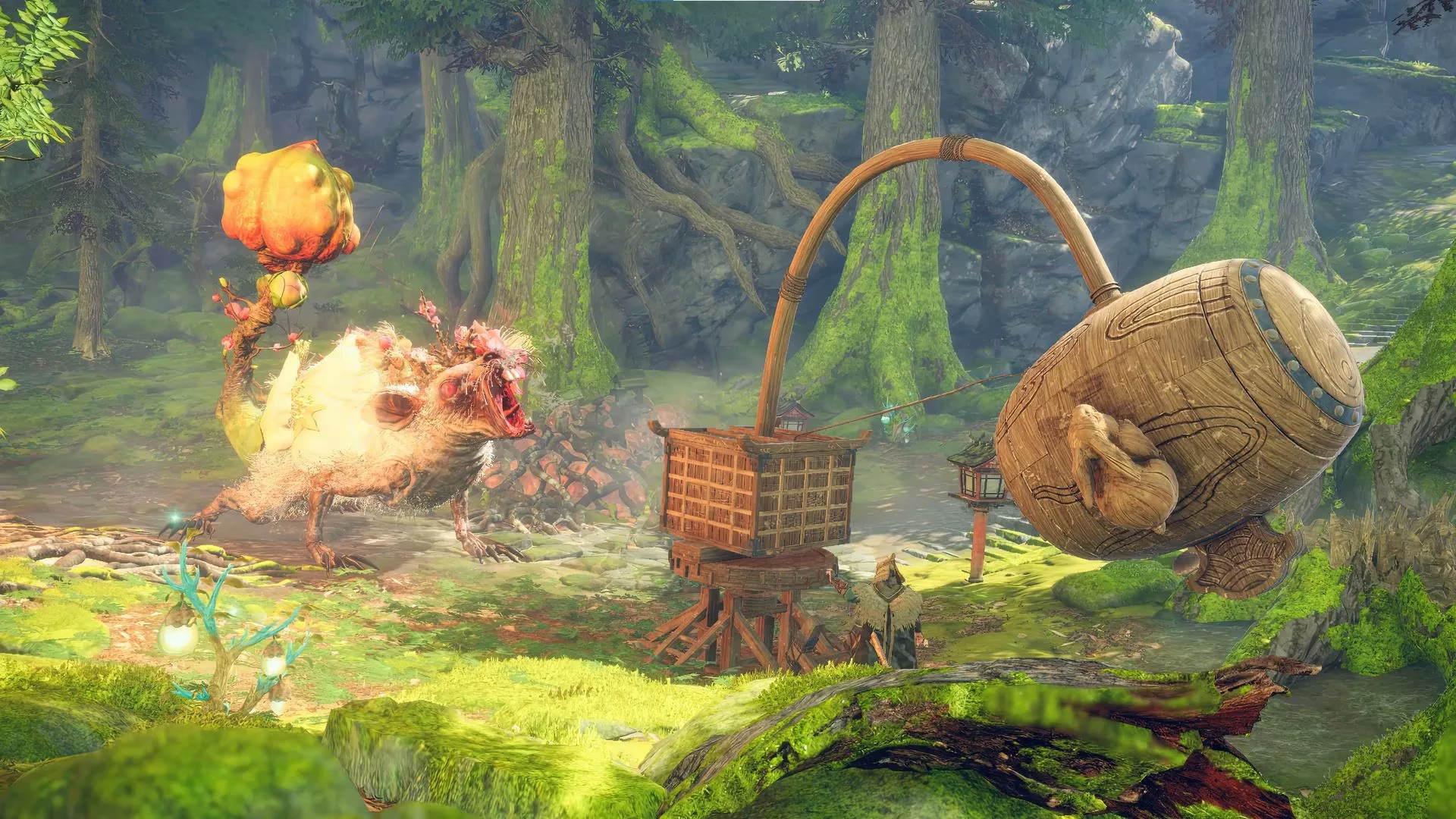
While often compared to Monster Hunter, Wild Hearts carved its own niche with a system that was nothing short of poetic in its execution. The Karakuri—ancient devices born from gathered Thread—transformed the hunt into a dynamic ballet of creation and combat. It was a system that whispered, "Think fast, build faster."
-
Basic Karakuri (Crate, Spring, Glider): Provided seamless, intuitive traversal. Need a quick boost? A Spring appears underfoot. A cliff in the way? A Glider materializes. It was all about fluid movement.
-
Fusion Karakuri (Bulwark, Pounder): Born from combining basics, these were tactical masterstrokes. Erect a massive Bulwark wall to block a raging Kemono's charge, or summon a colossal Pounder hammer for a stunning counter-attack. The fusion was instant, the impact immediate.
-
Dragon Karakuri (Hunter's Tent, Flying Vine): These persistent structures, powered by Dragon Pits, served as strategic footholds in the world—a makeshift checkpoint here, a tracking vine there.
The entire philosophy was built on speed and responsiveness. Resources were gathered from the environment in the heat of the moment, and construction was a near-instantaneous menu selection. This wasn't just convenient; it was core to the game's thrilling, on-your-feet rhythm. Players weren't managers; they were architects in the blink of an eye.
The Weight of Connection: Death Stranding's Deliberate Burden
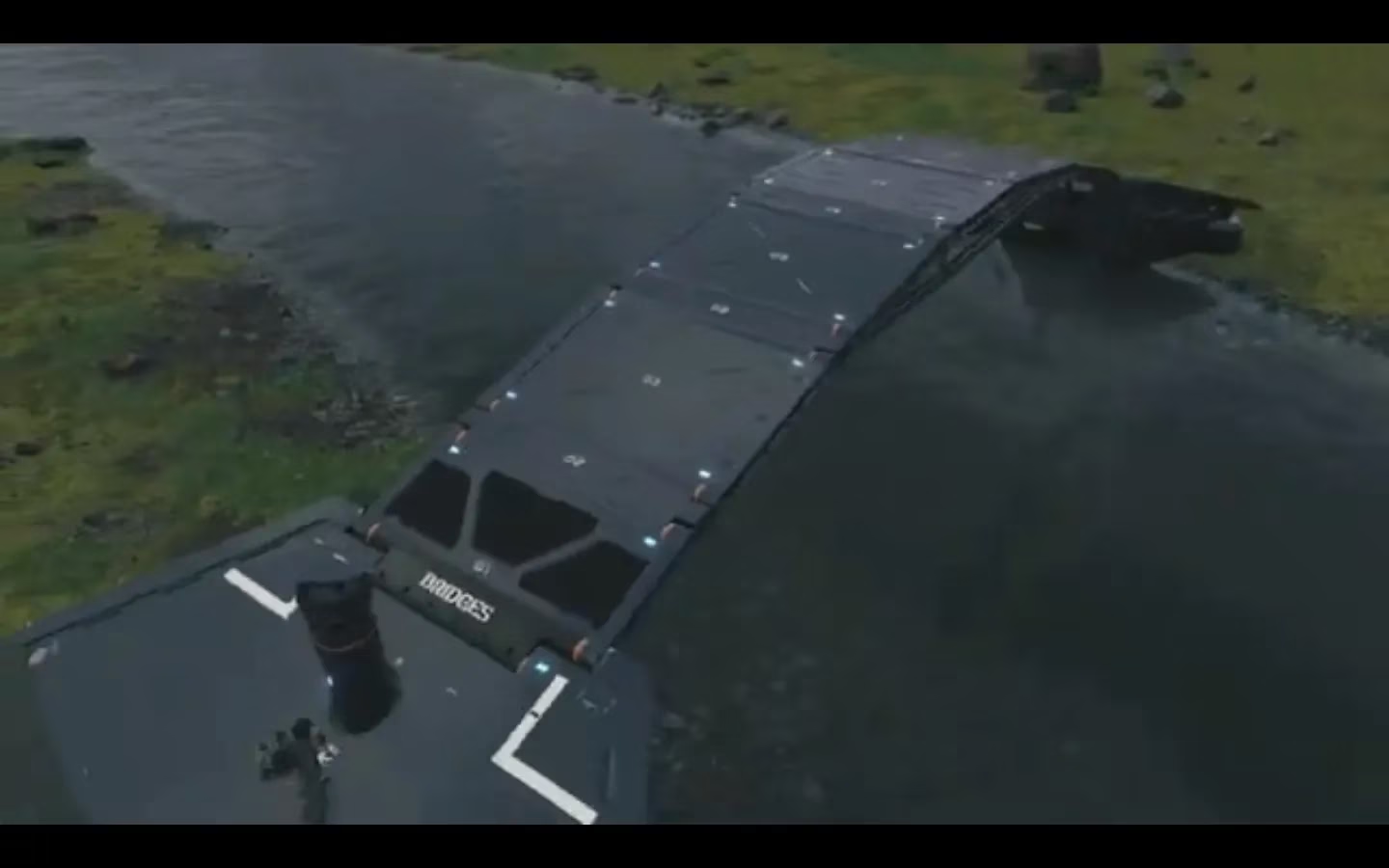
In stark contrast, building in Death Stranding was a testament to deliberate effort and shared struggle. The Portable Chiral Constructor (PCC) was a tool of profound consequence, but its process was methodical, almost ritualistic.
-
Placement: Find or fabricate a PCC, then carefully position it in the treacherous landscape.
-
Supply: For anything beyond a simple generator, the real work began: delivering the necessary metals, ceramics, and chiral crystals to the site. This often meant multiple treacherous trips, a meta-delivery quest on top of the main ones.
-
Fabrication & Maintenance: Only after supplies were deposited would the PCC slowly print the structure. And this was not the end. The relentless Timefall would decay everything, demanding constant vigilance and resource investment for repairs, often sourced from other players' generosity through the online strand system.
This system brilliantly reinforced the game's themes of connection and shared burden. That Bridge across a ravine wasn't just a path; it was a collective achievement, a literal structure of social contract. Yet, from a pure gameplay perspective in 2026, this process can feel like it's testing patience a bit too much. As one veteran porter might say, "Sometimes, you just need a ladder, not a legacy."
A New Blueprint: Weaving Strands and Threads for DS2
So, what could Death Stranding 2 learn from Wild Hearts' playbook without losing its soul? The answer lies not in discarding the PCC, but in streamlining its poetry.
| Aspect | Death Stranding (2019) | Potential Death Stranding 2 Evolution |
|---|---|---|
| Resource Procurement | Physical delivery to site, often multiple trips. | Remote resource allocation from Safe Houses, or reduced/material-light "quick-build" options for essential items. |
| Construction Speed | Slow printing process after delivery. | Faster fabrication, or a "priority build" option that consumes more resources for instant placement in emergencies. |
| Player Agency | Process emphasizes planning and community. | Retains planning for major projects, but adds responsive tools for on-the-fly adaptation. |
Imagine a scenario where Sam, caught in a sudden Timefall storm with precious cargo, could rapidly deploy a basic shelter canopy without needing to first fetch 400 special alloys. Or where setting up a zipline anchor point was a matter of securing a location and committing chiral bandwidth, not making three round trips with a backpack full of resin. The tedious back-and-forth could be minimized, preserving the weight of major infrastructure projects while easing the friction of survival tools.
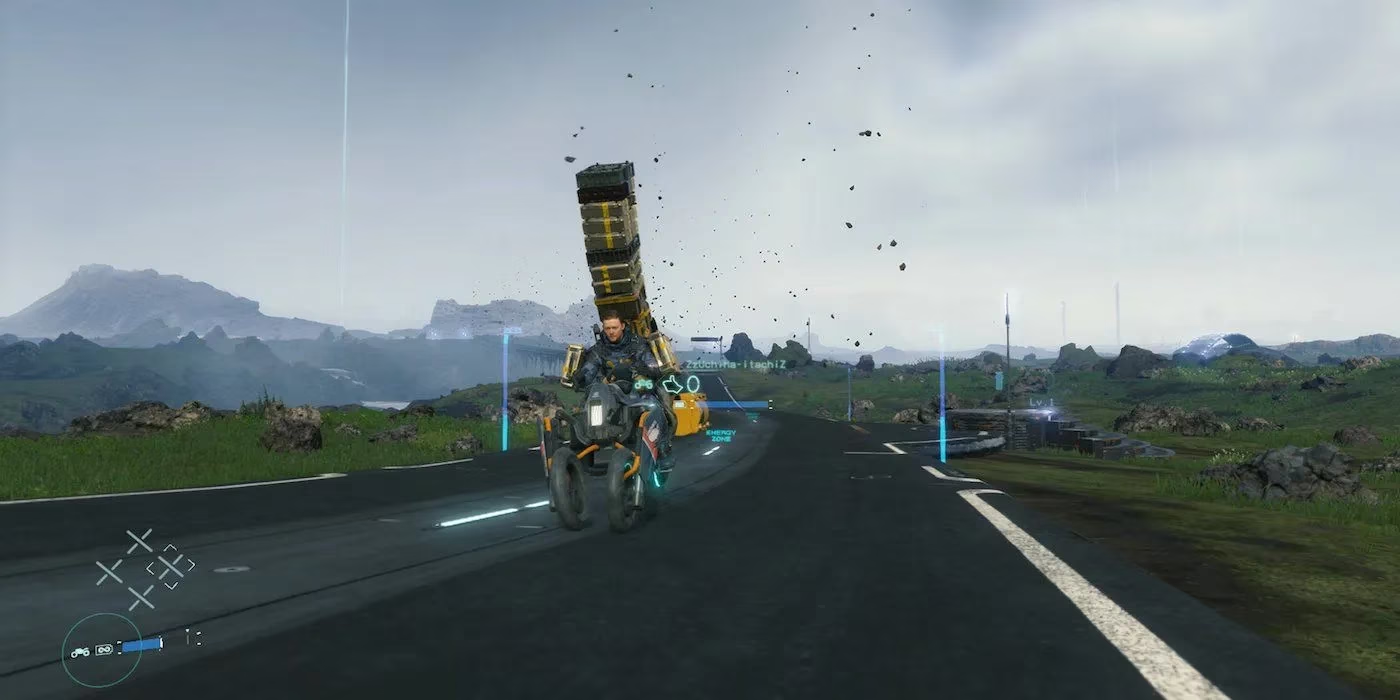
Kojima Productions' artistic vision is non-negotiable, and rightly so. The deliberate pace of Death Stranding was a feature, not a bug. But in the evolving landscape of 2026, there's room for a happy medium. Wild Hearts demonstrated that rapid, responsive building can create its own kind of tension and beauty—the beauty of adaptability. A Death Stranding 2 that learns this lesson could offer the best of both worlds: the deep, meaningful connection of building a lasting world, and the sharp, satisfying thrill of crafting your salvation in the very moment it's needed. After all, in a world that's constantly trying to erase your footsteps, sometimes the most powerful connection is the one you make right now.